
5 Traditional Mexican Dishes, Their Origins, and Tips for Authentic Home Cooking

Updated: 54 minutes ago
cactus cantina in alpharetta..Mexican food is often reduced to quick weeknight tacos or a bowl of chips and salsa, but the real story is much deeper. It is a cuisine shaped by Indigenous crops, regional climates, colonial history, migration, family rituals, and careful technique.
Corn, chiles, beans, tomatoes, squash, cacao, herbs, and slow-cooked meats form the base of many beloved dishes. Yet each region uses them in its own way. A sauce from Puebla tastes different from one in Oaxaca. A Yucatán marinade tells a different story than a Mexico City taco stand.
This guide explores five traditional Mexican dishes, where they come from, what makes them special, and how they are enjoyed. It also includes practical tips for making authentic Mexican food at home with better flavor, better texture, and more respect for the traditions behind the plate.
Mexican food begins with region, history, and technique
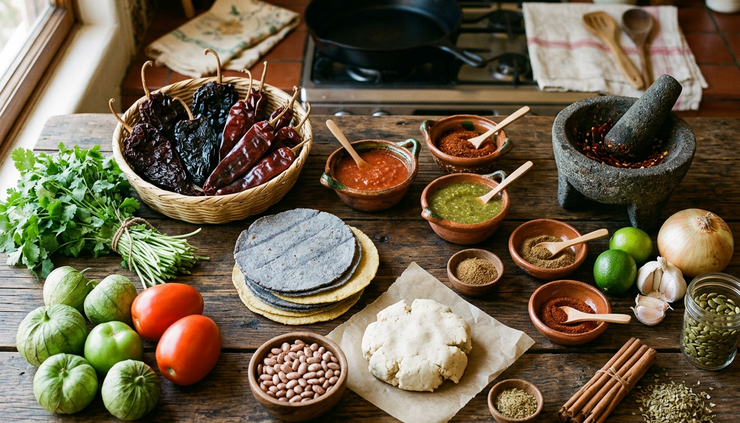
Mexico’s food culture is not one single style. It changes from coast to coast and from highlands to desert. Oaxaca is known for complex moles and tlayudas. Puebla is famous for mole poblano and chiles en nogada. The Yucatán uses achiote, sour orange, habanero, and banana leaves. Northern Mexico is known for flour tortillas, grilled meats, and cheese.
Many traditional dishes also carry layers of history. Indigenous communities cultivated corn, beans, squash, tomatoes, chiles, and cacao long before Spanish colonization. Later, ingredients such as pork, beef, dairy, wheat, cinnamon, cloves, and rice entered the kitchen. Over time, cooks combined old and new ingredients into dishes that now feel unmistakably Mexican.
What ties them together is attention to process. Chiles are toasted before soaking. Corn is treated with lime through nixtamalization to make masa. Sauces are cooked until their flavors settle. Meats are marinated, wrapped, steamed, braised, or roasted with patience.
That is why traditional Mexican food is as much about method as ingredients.
Five traditional Mexican dishes that tell a story
Tamales are a link to ancient Mesoamerican cooking
Tamales are one of the oldest and most meaningful foods in Mexico. Their roots go back to ancient Mesoamerica, where corn was central to both daily life and spiritual belief. Portable, filling, and adaptable, tamales were practical food for travelers, workers, and ceremonies.
At their core, tamales are made from masa, a dough prepared from nixtamalized corn. The masa is spread onto corn husks or banana leaves, filled, wrapped, and steamed. Fillings vary by region and family.
Common ingredients include:
Masa harina or fresh masa
Lard or another fat for tenderness
Chicken, pork, beans, cheese, or vegetables
Red chile sauce, green tomatillo sauce, or mole
Corn husks or banana leaves
Tamales are strongly tied to gatherings. Families often make them in large batches because the process takes time and many hands. They are common during Christmas, Día de la Candelaria, birthdays, and community celebrations.
They are usually eaten warm, still wrapped, with salsa, crema, or atole, a warm corn-based drink. The wrapper is part of the experience. Opening a tamal at the table feels like unwrapping a small gift.
Mole poblano shows the art of Mexican sauce making
Mole poblano is one of Mexico’s most famous sauces. It is closely associated with Puebla, though mole as a category has roots in Indigenous sauce traditions and later colonial-era adaptations. The word “mole” comes from the Nahuatl word `molli`, meaning sauce or mixture.
Mole poblano is known for its deep, layered flavor. It often includes dried chiles, nuts or seeds, spices, bread or tortillas for body, tomatoes or tomatillos, and a small amount of chocolate. The chocolate does not make the sauce taste like dessert. It adds depth, color, and gentle bitterness.
Key ingredients often include:
Mulato, ancho, or pasilla chiles
Tomatoes or tomatillos
Sesame seeds, almonds, or peanuts
Cinnamon, cloves, and black pepper
Mexican chocolate
Corn tortillas or bread for thickening
Mole poblano is often served over turkey or chicken, with sesame seeds scattered on top. It is a celebration dish, often prepared for weddings, holidays, baptisms, and important family meals.
The cultural significance comes from the labor. Mole asks for toasting, frying, grinding, blending, and slow simmering. Each step builds flavor. Making it well requires patience, but that patience is the point. A good mole carries the taste of care.

Pozole turns corn and broth into celebration
Pozole is a hearty soup or stew made with hominy corn and meat, most often pork or chicken. Its origins reach back to pre-Hispanic Mexico, where large-kernel corn held spiritual and cultural importance. Today, pozole remains a dish for gatherings, especially around holidays, Independence Day celebrations, birthdays, and weekend family meals.
The name comes from Nahuatl and is connected to the idea of foam, referring to the way hominy kernels open as they cook. These puffed kernels give pozole its signature texture.
There are several well-known styles:
Style | Common base | Typical flavor |
Pozole rojo | Dried red chiles | Earthy and warming |
Pozole verde | Tomatillos, green chiles, herbs | Bright and fresh |
Pozole blanco | Clear broth without chile sauce | Simple and savory |
Key ingredients include:
Hominy
Pork shoulder, chicken, or another stewing meat
Garlic and onion
Dried chiles for red pozole
Tomatillos and herbs for green pozole
Garnishes such as radishes, cabbage, lime, onion, and oregano
Pozole is as much about the toppings as the broth. Each bowl is finished at the table, so every person can adjust the crunch, acidity, heat, and aroma. Shredded cabbage or lettuce adds freshness. Lime wakes up the broth. Mexican oregano adds fragrance. Toasted tostadas served on the side make the meal feel complete.
Cochinita pibil carries the flavors of the Yucatán
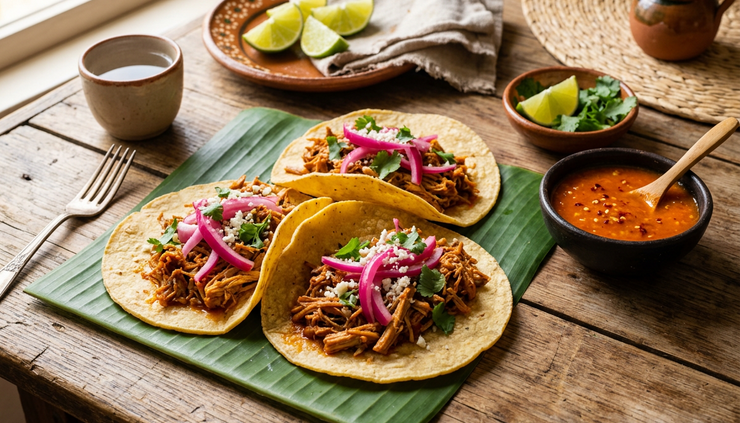
Cochinita pibil comes from the Yucatán Peninsula and reflects Maya cooking traditions along with later Spanish influence. The word “pibil” refers to cooking in a pib, an underground pit oven. Traditionally, pork is marinated, wrapped in banana leaves, and slow-cooked until tender.
The signature flavor comes from achiote, also known as annatto, which gives the pork its red-orange color. The marinade often includes sour orange juice, garlic, spices, and sometimes vinegar if sour orange is not available.
Key ingredients include:
Pork shoulder or pork butt
Achiote paste
Sour orange juice or a mix of orange and lime juice
Garlic
Mexican oregano
Banana leaves
Pickled red onions
Cochinita pibil is typically served in tacos, tortas, or on a plate with rice and beans. Pickled red onions are essential because they cut through the richness of the pork. Habanero salsa often appears on the side, especially in the Yucatán, where the chile is part of the regional identity.
This dish shows how place shapes flavor. Achiote, citrus, banana leaves, and slow cooking all point to the Yucatán’s climate, ingredients, and traditions.
Tacos al pastor show how migration shaped Mexican street food
Tacos al pastor are now a classic of Mexican street food, especially in Mexico City. Their story is tied to Lebanese migration to Mexico in the late 19th and early 20th centuries. Shawarma-style vertical spit cooking met Mexican chiles, pork, tortillas, and salsa, creating a dish with its own identity.
Thin slices of pork are marinated in a red adobo made with dried chiles, achiote, vinegar or citrus, garlic, and spices. The meat is stacked on a vertical spit called a trompo. As it cooks, the outer layer is shaved off into small corn tortillas. Pineapple is often cooked on top of the spit and added to the taco.
Key ingredients include:
Thinly sliced pork
Guajillo chiles or other dried red chiles
Achiote
Garlic and vinegar
Pineapple
Corn tortillas
Onion, cilantro, lime, and salsa
Tacos al pastor are casual, social, and fast-moving. They are often eaten standing at a taquería counter, late at night, or as a quick meal with friends. The best versions balance smoky meat, chile warmth, sweet pineapple, sharp onion, fresh cilantro, and a squeeze of lime.
Their cultural meaning is different from a ceremonial mole or holiday pozole. Tacos al pastor speak to city life, migration, adaptation, and the everyday pleasure of eating something hot and fresh from the grill.
How to make authentic Mexican food at home
Cooking Mexican food at home does not require a restaurant kitchen. It does require better ingredients, a few key tools, and respect for technique. Start with the basics and build from there.
Stock the pantry with essential Mexican ingredients
A strong pantry makes a huge difference. Keep these ingredients on hand:
Dried chiles
Ancho, guajillo, pasilla, and árbol chiles each bring different heat, color, and flavor. Toast them briefly, then soak and blend them into sauces.
Mexican oregano
It tastes more citrusy and earthy than Mediterranean oregano. Use it in pozole, beans, marinades, and salsas.
Achiote paste
This is essential for cochinita pibil and useful in marinades for grilled meats.
Masa harina
Use it for tortillas, tamales, sopes, and thickening some soups or drinks.
Cumin, cinnamon, cloves, and allspice
Use these carefully. Mexican cooking often uses spices for balance, not to overpower the dish.
Epazote
This herb is often used with beans and some quesadillas. It has a bold flavor, so a little goes a long way.
Use techniques that build real flavor
Small steps can make home-cooked Mexican food taste more authentic.
Toast dried chiles before soaking them.
A few seconds on a hot comal or skillet wakes up their oils. Do not burn them, or they can turn bitter.
Warm tortillas properly.
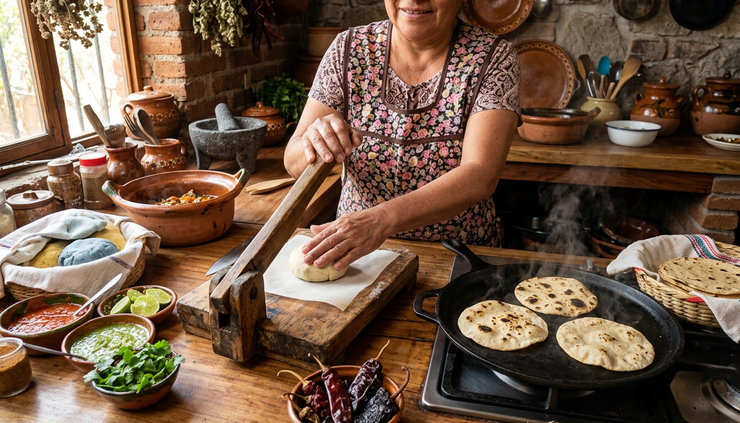
Heat corn tortillas on a dry comal or skillet until soft and lightly spotted. Keep them wrapped in a clean towel so they stay flexible.
Cook sauces after blending.
Many salsas and adobos taste raw until they are fried or simmered. Cooking the sauce helps the flavors blend and deepen.
Use fresh garnishes.
Lime, cilantro, onion, radishes, cabbage, and pickled onions add contrast. They are not afterthoughts.
Think in layers.
A great taco or bowl of pozole has richness, acidity, heat, freshness, and texture. If the dish tastes flat, it may need salt, lime, a hotter salsa, or a fresh garnish.
Choose the right tools
A few tools make the cooking easier and more enjoyable:
Tool | Why it helps |
Comal or cast-iron skillet | Warms tortillas and toasts chiles |
Blender | Makes smooth salsas, moles, and adobos |
Steamer pot | Essential for tamales |
Dutch oven | Useful for pozole, braises, and slow simmering |
Tortilla press | Helps make even homemade corn tortillas |
You do not need everything at once. A skillet, blender, and sturdy pot can carry most home cooks a long way.
The best Mexican meals honor both flavor and memory
The beauty of Mexican cuisine lies in how much meaning can fit into one dish. Tamales bring people together through shared labor. Mole poblano turns sauce making into ceremony. Pozole makes a pot of corn and broth feel like a celebration. Cochinita pibil carries the taste of the Yucatán. Tacos al pastor show how migration can create something beloved and new.
For home cooks, the best place to start is simple. Buy better dried chiles. Warm corn tortillas with care. Learn one salsa well. Make pozole on a weekend. Prepare tamales with friends or family when there is time to enjoy the process.
Authentic cooking is not about perfection. It is about paying attention to origins, ingredients, and technique so the food carries more than flavor. It carries tradition.
Comments